
5G Data Centers & the Emergence of New-Generation Optical Fibers: Why High-Speed Transmission Matters
2024-05-10

As the world prepares for the rollout of 5G networks, the speed and reliability of data transmission are more crucial than ever. This is particularly true in the case of data centers, where huge volumes of data are being transmitted across networks. The emergence of new-generation optical fibers offers a compelling solution to this challenge, offering high-bandwidth and long-distance transmission without the need for costly signal regeneration.
New-generation optical fibers support advanced optical signaling techniques, known as coherent transmission. These techniques enable the optimization of bandwidth utilization, leading to faster transmission speeds and lower error rates. Along with MPO/MTP cabling solutions, these optical fibers can help operators construct high-performance 5G data centers that are optimized for speed, performance, and reliability.
One of the most significant advantages of new-generation optical fibers is their superior optical properties. These fibers can support longer transmission lengths, making them ideal for data centers that require long-distance connectivity. Additionally, they offer wider wavelength ranges, allowing them to support emerging 5G applications that require higher transmission speeds and wider bandwidths.
New-generation optical fibers are the key to the future of 5G data centers. With their ability to support long-distance, high-bandwidth transmission and advanced optical signaling techniques, these fibers offer a compelling alternative to traditional copper-based networking solutions. As operators continue to prepare for the demands of 5G, new-generation optical fibers will undoubtedly play a central role in the development of next-generation data networks.
From Speed to Security: How 5G Networks are Changing the Game for Data Security and Privacy
The next generation of optical fiber technology brings a high-capacity, high-speed, and long-distance optical transmission network to 5G data centers.
Related Article

As data centers upgrade to 40G/100G or even higher rates, optical fiber connectors, with their advantages of high bandwidth, low loss and low energy consumption, are gradually replacing traditional copper cable connections. In the network architectures driven by 5G, cloud computing and AI, high-performance optical fiber connectors have become key components to ensure stable transmission, and the market demand continues to rise.
The demand for optical fiber connectors has soared: a key choice in the era of high-speed networks
MPO (Multi-Fiber Push On) patch cord is a kind of multi-core optical fiber connector, which can accommodate optical fibers with up to 12 cores or even higher cores, greatly improving the connection density per unit area. It adopts a push-type design, which is convenient for plugging and unplugging and is particularly suitable for high-density wiring environments.
MPO patch cords lead the high-density optical interconnection revolution: single-core to multi-core, smarter plugging and unplugging

As 5G network technology continues to expand, the need for secure data transmission is becoming increasingly important. In response to this need, data centers are implementing new measures to ensure that high-speed data transmission is also safe and secure.
From Speed to Security: How 5G Networks are Changing the Game for Data Security and Privacy
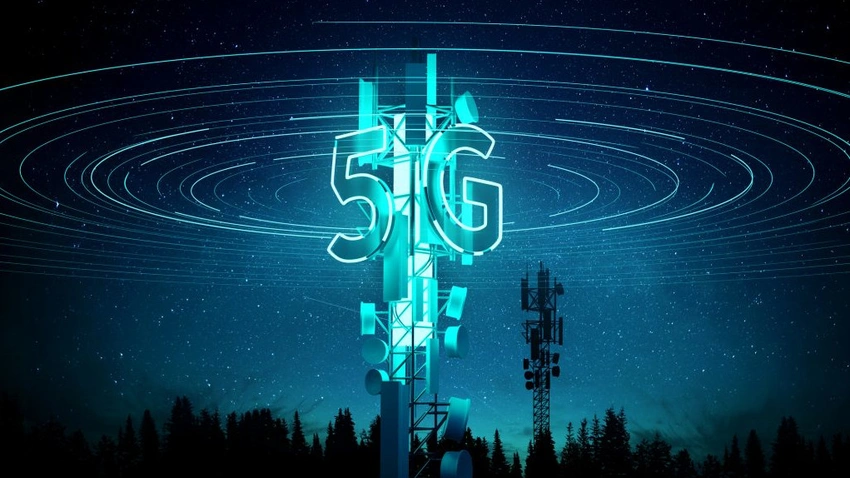
The emergence of new-generation optical fibers is set to revolutionize the way we build and deploy optical networks, especially in the context of 5G data centers. With their recent advancements, these optical fibers offer a range of benefits that make them ideally suited for use in 5G data centers.
The next generation of optical fiber technology brings a high-capacity, high-speed, and long-distance optical transmission network to 5G data centers.